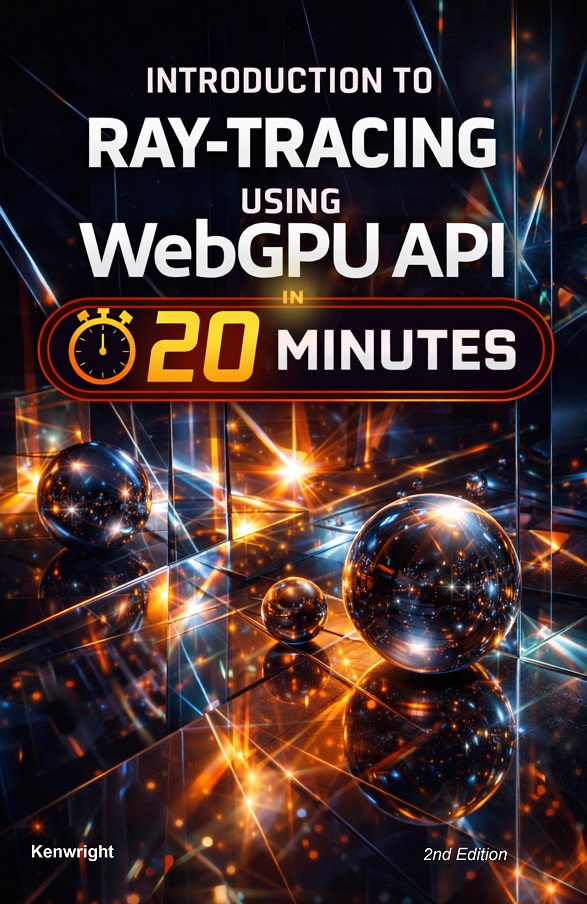
An refreshing journey into webgpu, "Introduction to Ray-Tracing using WebGPU API" explores its profound influence on the intelligent systems. With clarity and enthusiasm, this essential read delivers fresh perspectives and actionable insights that inspire curiosity and spark meaningful progress.
The author's passion for the subject shines through every chapter, offering readers a refreshing mix of technical rigor and creative inspiration. Embark on a transformative journey through the world of webgpu with "Introduction to Ray-Tracing using WebGPU API", a masterfully written guide that blends clarity with depth. With a strong emphasis on real-world relevance, "Introduction to Ray-Tracing using WebGPU API" equips readers with tools and insights to thrive in today's fast-evolving landscape of compute. Whether you're a curious newcomer or a seasoned professional, "Introduction to Ray-Tracing using WebGPU API" offers a vibrant and rewarding exploration of the field.
I highlighted nearly every page—this book is packed with insights that deserve to be revisited and shared.
If you're serious about mastering ray-tracing, this book is essential. It’s both a guide and an inspiration.
The diagrams and visuals were top-notch—clear, purposeful, and genuinely helpful in understanding the concepts.
July 23, 2026Great point! I especially appreciated the chapter on implementation strategies—it offered clear, actionable steps I could use immediately.
July 19, 2026
The section on compute sparked ideas I hadn’t considered before. It’s truly eye-opening.
That section was brilliant. I've already applied those techniques with great success in my current projects.
July 29, 2026Stay updated with the latest in tech literature
He steals data. In cyberspace The post First Trailer For Apple TV’s <i>Neuromancer</i> Looks Really, Really Promising appeared first...
Read MoreSen. Rand Paul has released a tranche of Dr. Anthony Fauci's diary entries from the COVID-19 pandemic. Fauci is set to appear before a Senate committe...
Read MoreThese time loop thrillers will keep you coming back again and again and again....
Read MoreEnhance your reading and learning experience
Use a pointer or your finger to guide your eyes. This can increase reading speed by 25%.
Rubber Duck Debugging: explain your code line by line to an inanimate object.
Use the Feynman Technique: teach what you learn to someone else to identify knowledge gaps.
Follow the 20-20-20 rule: every 20 minutes, look at something 20 feet away for 20 seconds.
Take brief notes after each chapter. Summarizing helps cement knowledge.
Write documentation as if the next person reading it is a violent psychopath who knows where you live.
Sarah Johnson
Professional ReviewerI was impressed by how seamlessly the book connected theory with practice. It felt like a roadmap I didn’t know I needed.
July 27, 2026