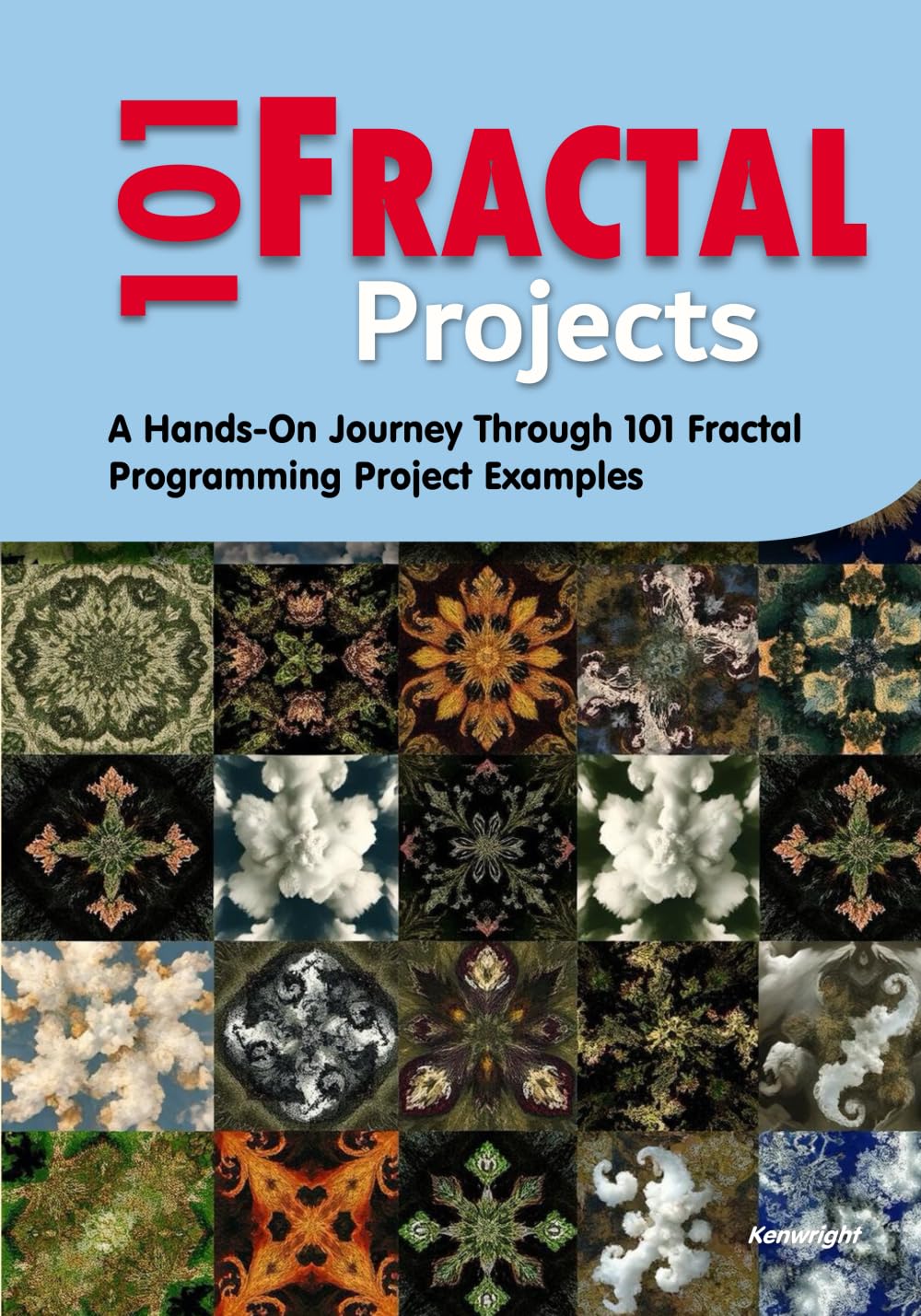
An illuminating journey into programming, "101 Fractal Projects (Paperback)" explores its profound influence on the data-driven world. With clarity and enthusiasm, this essential read delivers fresh perspectives and actionable insights that inspire curiosity and spark meaningful progress.
The author's passion for the subject shines through every chapter, offering readers a refreshing mix of technical rigor and creative inspiration. Each page is infused with positivity and purpose, encouraging readers to think boldly and embrace new ideas with confidence. From foundational principles to advanced techniques, "101 Fractal Projects (Paperback)" delivers a well-rounded experience that caters to learners at every stage.
This book doesn’t just inform—it challenges assumptions and introduces a bold, refreshing framework for thinking differently.
I found myself nodding along constantly—so many moments of 'aha!' throughout the book.
September 20, 2026
The section on emerging trends sparked ideas I hadn’t considered before. It’s truly eye-opening.
That section was brilliant. I've already applied those techniques with great success in my current projects.
September 14, 2026
After 15 years in the industry, I rarely come across something this refreshing. Every page delivers insights that are both practical and forward-thinking. A must-have for professionals.
The section on emerging trends opened up new possibilities I hadn’t considered before.
September 14, 2026Stay updated with the latest in tech literature
The fall equinox, which arrives Tuesday in the U.S., brings shorter days, and chances to witness alignment between Earth and the sun. It's a modern ve...
Read MoreQuantum computing is a devilishly complex technology, with many technical hurdles impacting its development. Of these challenges two critical issues ...
Read MoreA closer look at TypeSafe AI’s Jev, what it actually does, what is genuinely new, and where the hype goes too far....
Read MoreEnhance your reading and learning experience
Organize books by color for visual appeal or by genre for practical access.
Follow the 20-20-20 rule: every 20 minutes, look at something 20 feet away for 20 seconds.
Create a dedicated reading space with good lighting and minimal distractions.
Rubber Duck Debugging: explain your code line by line to an inanimate object.
Take brief notes after each chapter. Summarizing helps cement knowledge.
Use the Feynman Technique: teach what you learn to someone else to identify knowledge gaps.
Sarah Johnson
Professional ReviewerI found myself nodding along constantly—so many moments of 'aha!' throughout the book.
September 22, 2026