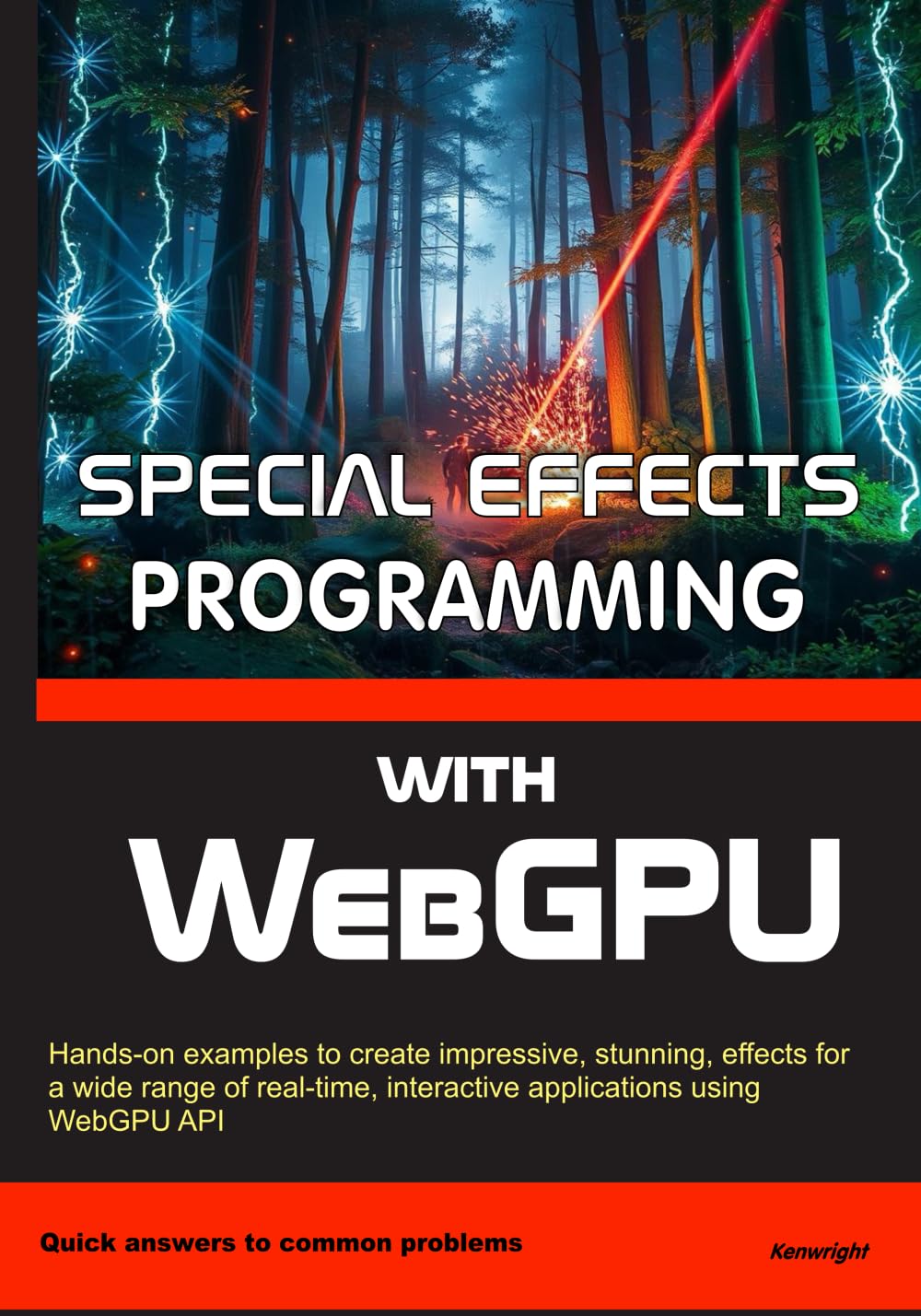
An visionary journey into webgpu, "Special Effects Programming with WebGPU (Paperback)" explores its profound influence on the future of innovation. With clarity and enthusiasm, this essential read delivers fresh perspectives and actionable insights that inspire curiosity and spark meaningful progress.
Embark on a transformative journey through the world of webgpu with "Special Effects Programming with WebGPU (Paperback)", a masterfully written guide that blends clarity with depth. From foundational principles to advanced techniques, "Special Effects Programming with WebGPU (Paperback)" delivers a well-rounded experience that caters to learners at every stage. Each page is infused with positivity and purpose, encouraging readers to think boldly and embrace new ideas with confidence.
The author's mastery of wgsl is evident throughout. Every chapter feels like a masterclass.
I loved the mix of academic depth and practical relevance. It’s a rare balance that this book achieves beautifully.
February 5, 2026
The author's tone is confident yet welcoming, making even the most technical concepts feel approachable and empowering.
I loved how the author used personal stories to illustrate key points. It added depth and authenticity to the material.
February 10, 2026I found myself nodding along constantly—so many moments of 'aha!' throughout the book.
February 7, 2026
It’s rare to find a book that speaks to both intellect and emotion. This one does—with grace and impact.
This book didn’t just inform—it inspired me to rethink how I approach graphics in my own work.
February 17, 2026Stay updated with the latest in tech literature
“Feeders” by Oliver Munday The night before we met with Babette, Sarah and I had almost canceled the interview due to stress. At the time,...
Read MoreThe first novel by a leading advocate for human exploration and settlement of Mars The post Mars or Bust! — <i>First Landing</i> by Robe...
Read MoreEnhance your reading and learning experience
Rubber Duck Debugging: explain your code line by line to an inanimate object.
Organize books by color for visual appeal or by genre for practical access.
Write documentation as if the next person reading it is a violent psychopath who knows where you live.
Follow the 20-20-20 rule: every 20 minutes, look at something 20 feet away for 20 seconds.
Use a pointer or your finger to guide your eyes. This can increase reading speed by 25%.
Use the Feynman Technique: teach what you learn to someone else to identify knowledge gaps.
Sarah Johnson
Professional ReviewerSame here. It’s rare to find a book that’s both intellectually rigorous and emotionally engaging—this one nails it.
February 12, 2026