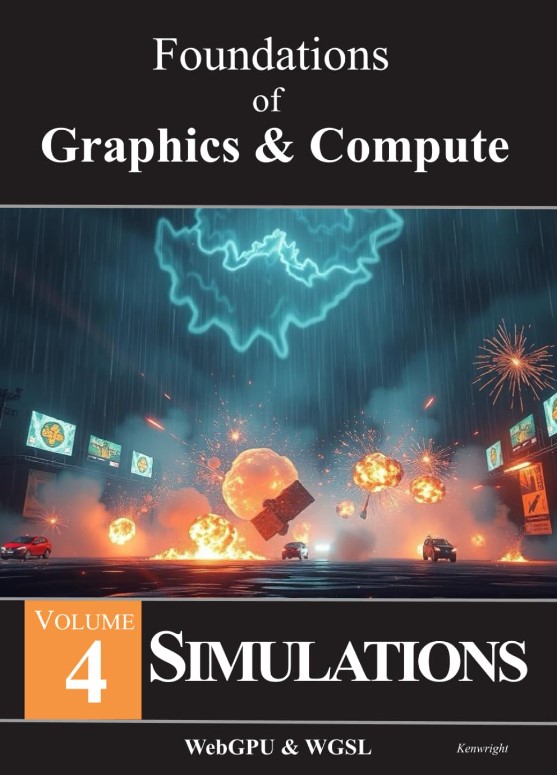
An refreshing journey into webgpu, "Foundations of Graphics & Compute: Volume 4 Simulations (Hardback)" explores its profound influence on the data-driven world. With clarity and enthusiasm, this essential read delivers fresh perspectives and actionable insights that inspire curiosity and spark meaningful progress.
This book stands out for its uplifting tone and empowering approach to graphics, making even the most complex topics feel approachable and exciting. Readers will find themselves motivated by the book’s clear explanations, thoughtful examples, and forward-thinking perspective. Whether you're a curious newcomer or a seasoned professional, "Foundations of Graphics & Compute: Volume 4 Simulations (Hardback)" offers a vibrant and rewarding exploration of the field. Each page is infused with positivity and purpose, encouraging readers to think boldly and embrace new ideas with confidence.
This book doesn’t just inform—it challenges assumptions and introduces a bold, refreshing framework for thinking differently.
The diagrams and visuals were top-notch—clear, purposeful, and genuinely helpful in understanding the concepts.
February 17, 2026
The storytelling woven into the analysis adds a human touch that makes the content both memorable and meaningful.
The section on compute opened up new possibilities I hadn’t considered before.
February 6, 2026I loved the mix of academic depth and practical relevance. It’s a rare balance that this book achieves beautifully.
February 10, 2026
I’ve already gifted copies to colleagues and friends—it’s that transformative and universally relevant.
That section was brilliant. I've already applied those techniques with great success in my current projects.
February 18, 2026Stay updated with the latest in tech literature
This package of online courses includes training on AI workflows, content, and data with lifetime access. The post Train Your Team to Use Generative A...
Read MoreQuantum computing is a devilishly complex technology, with many technical hurdles impacting its development. Of these challenges two critical issues ...
Read MoreEnhance your reading and learning experience
Take brief notes after each chapter. Summarizing helps cement knowledge.
Use the Feynman Technique: teach what you learn to someone else to identify knowledge gaps.
Organize books by color for visual appeal or by genre for practical access.
Follow the 20-20-20 rule: every 20 minutes, look at something 20 feet away for 20 seconds.
Write documentation as if the next person reading it is a violent psychopath who knows where you live.
Create a dedicated reading space with good lighting and minimal distractions.
Sarah Johnson
Professional ReviewerYes! I found the visual summaries at the end of each chapter incredibly helpful for reviewing and retaining key ideas.
February 19, 2026